E-commerce is no longer centered around desktop websites. Today, the smartphone has become the primary gateway for shopping, payments, customer engagement, and business growth. Mobile commerce has shifted how consumers discover, compare, and purchase products.
Customers now expect speed, convenience, and personalization directly from their phones. Businesses that fail to optimize for mobile lose both attention and revenue. Mobile is no longer an additional channel, it is the main battlefield of digital commerce.
Why Mobile Commerce Matters
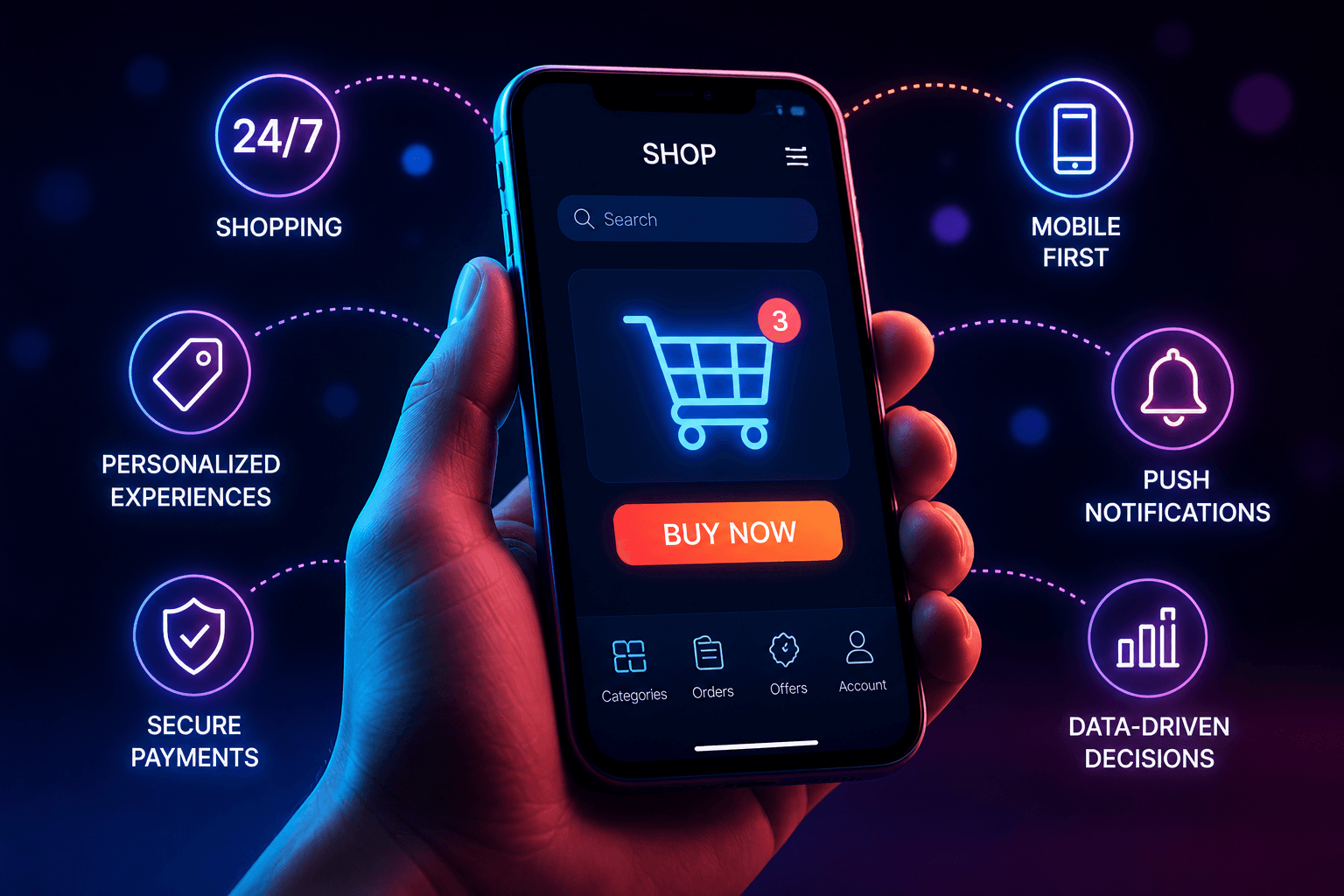
- 24/7 access to customers through smartphones
- Faster checkout and simplified payment systems
- Push notifications and direct customer engagement
- Personalized shopping experiences through user data
- Higher conversion opportunities through mobile-first design
Challenges Businesses Must Solve
Mobile commerce also creates new challenges. Poor mobile design, slow loading speed, difficult payment flows, and weak customer trust can destroy conversions quickly. Security, usability, and performance must be treated as strategic priorities, not technical details.
My Perspective
In strategic operations, I see the same principle repeatedly: the easier the system, the stronger the adoption. Whether managing federation registrations, event systems, or digital platforms, users always choose speed and simplicity. E-commerce follows the same rule. Mobile success depends on reducing friction and creating trust instantly.
Conclusion
Mobile commerce is not the future, it is the present. Businesses that design for mobile-first behavior will dominate customer attention, while those relying on outdated desktop-first thinking will fall behind. Winning the pocket economy means meeting the customer exactly where they already are: on their phone.